

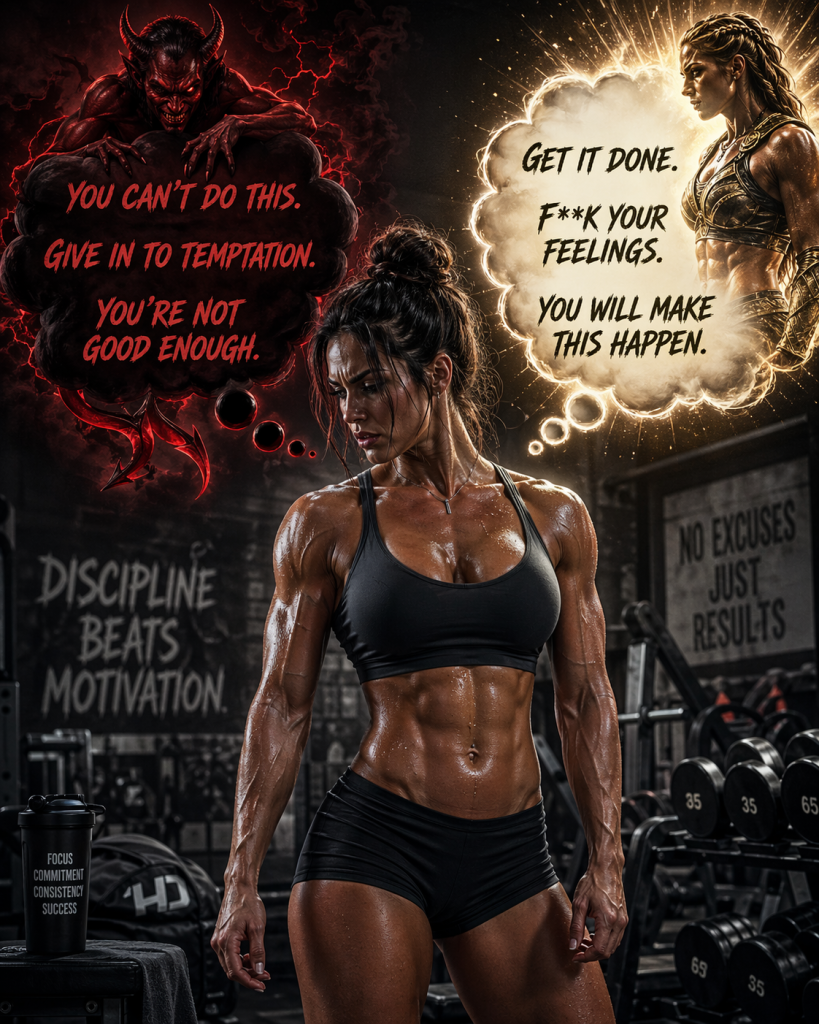

Setbacks are part of prep. A missed workout, an off-plan meal, low energy, schedule changes, poor sleep, travel, stress, or a rough check-in does not mean everything is falling apart. It means you need to respond better.
A lot of damage in prep comes from the reaction to a setback, not the setback itself. One mistake turns into guilt, guilt turns into avoidance, and then one bad moment becomes several.
Discipline is what keeps prep moving when motivation drops. It is the ability to stick to the plan, make solid decisions, and keep your standards high even when the day feels off.
A lot of people think they need to feel ready, inspired, or confident to execute well. They do not. Prep gets better when you stop depending on mood and start depending on standards.
Prep can bring up a lot. Stress, impatience, pressure, comparison, self-doubt, irritability, and disappointment all show up at some point. Emotional control does not mean you never feel those things. It means you do not let them run the day.
An athlete with emotional control can feel frustrated and still execute. She can feel uncomfortable and still stay on plan. She can have a rough moment without turning it into a rough week.
Some days feel good. Some do not. Hard days are part of the process. You may feel flat, tired, hungry, moody, discouraged, or mentally drained. That does not mean prep is broken. It means prep is demanding.
The athlete who gets through hard days well is usually the one who accepts them faster, keeps her routine tighter, and does not waste energy making the day feel bigger than it is.
One rough meal, one emotional day, one tired workout, or one off check-in does not define the whole week unless you let it.
When prep feels overwhelming, do not try to solve everything in your head. Bring it back to the next decision, the next meal, the next workout, the next check-in.
Everyone has one. For some it is guilt. For some it is overthinking. For some it is shutting down. You get stronger when you catch your pattern faster and stop feeding it.
Prep gets uncomfortable. Hunger, fatigue, impatience, and frustration are part of it. The problem starts when every hard feeling gets turned into a bigger story than it is. You handle prep better when you let discomfort be there without letting it run the day.
Your mood will shift. Your standards should not. Serious competitors do not only execute well when they feel motivated, confident, or in a good headspace. They keep showing up with the same level of responsibility even when the day feels off.
