


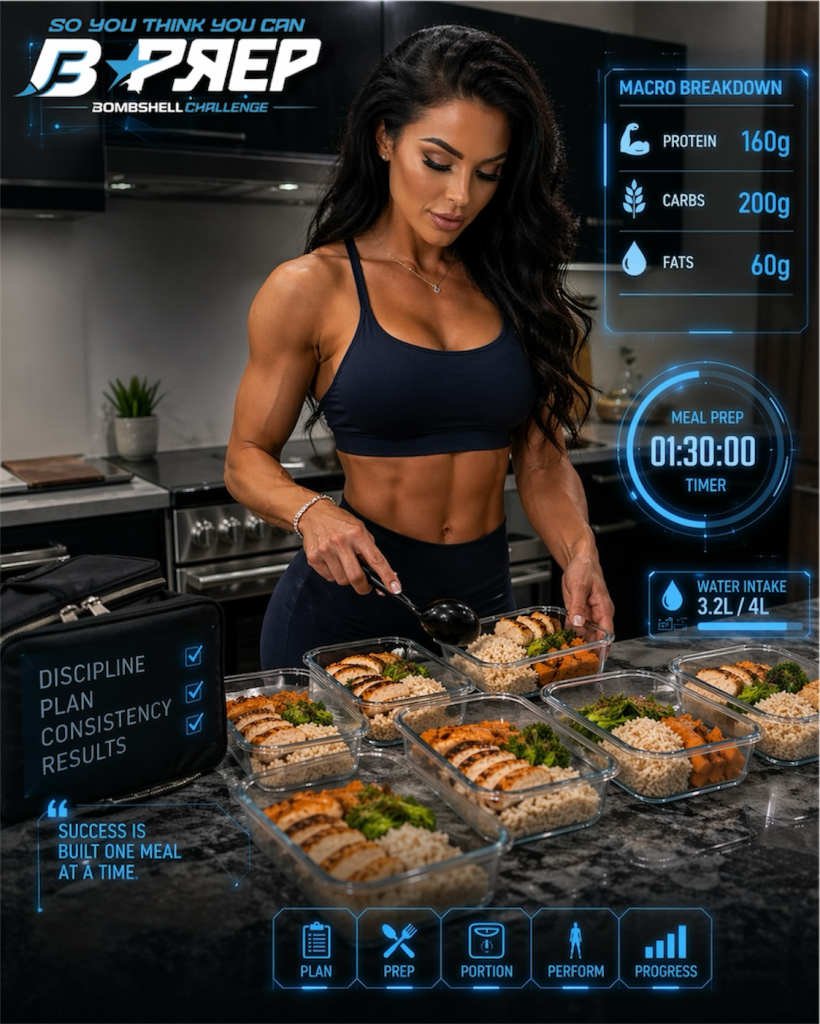
Meal timing. Macros. Consistency. Discipline.
This week is about learning how to eat in a way that supports the physique you are trying to build.
A better physique comes from repeated days of staying on plan, hitting your targets, and handling hunger, cravings, and busy schedules without falling off.
This week, the focus is on tightening up your nutrition habits and learning where your discipline needs work.
This week is about food discipline. Your physique reflects what you repeat with your nutrition.
Pay attention to:
Are you eating on a schedule that keeps you consistent?
Meal timing matters because it affects compliance, training performance, recovery, digestion, hunger, and how steady your day feels.
For most, the biggest value in meal timing is structure. When meals are spaced out well, energy tends to be steadier, cravings are easier to manage, and it becomes easier to hit your macros without turning the end of the day into a mess.
From a physique standpoint, meal timing also helps support training output, recovery, and consistency in protein intake for muscle development and maintenance. Going too long without eating can leave some athletes flat, hungry, distracted, and more likely to overeat later. Cramming everything late can hurt digestion, make adherence harder, and create a sloppy rhythm that usually catches up to the physique.
When prep gets harder, routine matters more. Someone who has a consistent meal structure usually handles prep better than the woman eating whenever life allows it.
Why it matters:
Are you actually hitting your numbers?
This is where a lot of people lose progress while telling themselves they are doing everything right.
In bodybuilding, results come from repeated exposure to the right intake over time. Protein, carbs, fats, (and fiber) each have a job. Protein supports muscle retention and recovery. Carbs support training performance, recovery, fullness, and output. Fats support hormones, health, and overall function. Fiber supports digestion optimization. When intake is off, the physique reflects it.
You do not build a polished physique by being “close”. Small misses repeated daily add up fast. Underreporting bites people all the time. So does untracked snacking, inaccurate portions, and food choices that look healthy but are still poorly measured.
Macro accuracy also matters because it gives clean feedback. When a coach adjusts food, those adjustments only mean something if the athlete was actually following the plan in the first place.
Why it matters:
Are the foods you are choosing making it easier to stay on plan, hit your macros, and manage hunger?
Food selection is one of the biggest reasons two athletes on the same macros can have very different results and very different compliance.
This is where nutrition experience matters. A macro target on paper is one thing. The foods chosen to fill those numbers are another. Some foods digest well, keep hunger more stable, and make adherence easier. Some make people bloated, still hungry, sluggish, or chasing cravings all day.
You want foods that help you perform, digest, recover, and stay consistent. Protein sources should digest well and be easy to repeat. Carb sources should support training and recovery without wrecking digestion. Fiber should be enough to support health and satiety without creating stomach issues. Food choices should fit the athlete, not just the numbers.
A person who constantly picks foods that leave them nutritionally unsatisfied or inflamed usually ends up fighting their plan all week.
Why it matters:
Are you prepared enough to stay on plan when life gets busy?
This is where prep usually gets won or lost.
Most do fine when the day is calm and controlled. The real test is whether the plan still happens when work runs late, travel comes up, energy drops, or life gets annoying. If food is not prepped, packed, logged, or thought through ahead of time, the athlete usually ends up making decisions in the moment. Those decisions are rarely the best ones.
A great prep is built on boring consistency. Meals ready. Food packed. Grocery habits in place. Backup options known. Schedule handled. That is what keeps intake stable over time.
Being prepared lowers decision fatigue. It cuts down emotional choices. It makes it easier to stay compliant without having to “be strong” every few hours.
Why it matters:
Where does hunger hit the hardest?
Hunger tells you a lot.
It can show you where meal timing needs work, where food selection is weak, where stress is high, where sleep is poor, or where the athlete is mentally unprepared for the demands of a diet phase. Hunger is part of prep. Being shocked by that every day helps nobody.
The goal is to understand it, not panic every time it shows up. Some hunger is expected, especially as body fat comes down. What matters is learning when it hits, how intense it gets, and what makes it worse. Late at night, after training, during long gaps between meals, during stressful work periods, around unplanned social eating. Those patterns tell all.
Managing hunger well helps athletes stay objective. It keeps one rough hunger window from turning into a full off-plan evening.
Why it matters:
Where are your choices not matching your goal?
This is where honesty matters.
Food discipline is about whether your repeated choices line up with the physique you say you want. A lot of athletes want a high-level result but still leave too much room for convenience, emotion, social eating, little extras, reward-based eating, and rationalizing choices that do not fit the phase they are in.
The body does not care about intention. It responds to what is repeated.
Discipline with food gets more important as the goal gets more specific. Stage-ready conditioning and shape do not come from casual habits. The athlete has to be able to make decisions based on the goal, not the moment.
That also means knowing your patterns. Where do you loosen up? Weekends, bites and tastes, eating out, stressful days, evenings, social settings. Food discipline gets better when those patterns are identified and tightened.
Why it matters:
When it comes to building a physique and getting stage ready, nutrition is not just about eating less or hitting a calorie number. It is about creating a system your body can respond to and a routine you can repeat long enough for the physique to change.
Most people think more variety makes prep easier. A lot of the time it does the opposite. Too many options create decision fatigue, more measuring errors, more digestive inconsistency, and more chances to go off plan. A better move is to build a small group of meals you digest well, enjoy enough, and can repeat without issue. That gives you cleaner feedback, tighter compliance, and a more stable physique response week to week.
A lot of athletes focus on what they ate and miss what happened after. Did that meal leave you full, still hungry, bloated, flat, sleepy, craving more food, or ready to train? That matters. The best food choices are not just the ones that fit your macros. They are the ones that also digest well, keep appetite under control, and help you perform. Start noticing the response your meals create, not just the numbers they hit.
Not all hunger means the same thing. Some hunger is true physical hunger. Some is habit hunger. Some is boredom, stress, poor meal timing, poor sleep, a food choice issue, or just knowing a certain food is in the house. High-level athletes get better when they learn to separate those. If you can identify what kind of hunger you are dealing with, you make better decisions instead of reacting to every urge like it deserves a meal.

This week, focus on:
Follow your nutrition plan as closely as possible this week and pay attention to your habits.
Track:
Do not just follow the plan. Learn your patterns.
Post your answers to the following 6 questions in the group & on your public social media with a photo/video involving your meals this week: